

Rubber boots have evolved from all-purpose "mucking-around" rain boots to highly engineered hunting boots, work boots and even snake boots. They offer an edge over traditional hunting boots because they're not only durable, abrasion-resistant and waterproof, but also scent-free.Most all-purpose rubber boots are one piece on the outside, from the bottom of the soles to the top of the collars. This is achieved through a process called vulcanization. Rubber is treated with a curative substance that is formed into precise shapes and dimensions, bonding the rubber in such a way that it's one solid unit.
Why Choose Us
Professional R&D team
We have internationally leading assembly line equipment, production technology, and testing equipment, as well as a professional R&D team, quality inspection team, and excellent sales and service team, providing the highest quality products and services to new and old customers.
Foreign trade market
After nearly 30 years of development, our customers are spread all over the world, including countries and regions such as the United States, Canada, Mexico, Germany, Finland, Russia, France, the United Kingdom, Italy, etc.
Quality Standards
To ensure the high quality standards of our products, we only use raw materials that comply with international quality standards and environmental conventions.
Perfect after-sales
We have a comprehensive after-sales service system to provide comprehensive services to every customer.
-
![Coal Mining Rubber Working Boots]() Coal Mining Rubber Working BootsItem: Coal mining rubber working bootsBrand Name:OEMModel Number:SFT-HT23174825Material:Rubber,Gender:ManFeature:WaterproofMOQ:1000pairsread more
Coal Mining Rubber Working BootsItem: Coal mining rubber working bootsBrand Name:OEMModel Number:SFT-HT23174825Material:Rubber,Gender:ManFeature:WaterproofMOQ:1000pairsread more -
![Childrens Neoprene Rain Boots in Winter]() Childrens Neoprene Rain Boots in WinterBrand Name: OEM. Model Number: SFT-HT231766. Upper Material: Neoprene,Rubber. Outsole Material: Rubber. Lining Material: Neoprene. Gender: Girl. MOQ: 1000pairs. Supply Ability: 100000Pairs per Monthread more
Childrens Neoprene Rain Boots in WinterBrand Name: OEM. Model Number: SFT-HT231766. Upper Material: Neoprene,Rubber. Outsole Material: Rubber. Lining Material: Neoprene. Gender: Girl. MOQ: 1000pairs. Supply Ability: 100000Pairs per Monthread more -
![Outdoor Camo Utility Waterproof Rubber Boots]() Outdoor Camo Utility Waterproof Rubber BootsOur rubber boots are of high quality. Whether it is the quality of the products or the after-sales service, we will provide you with all-round protection. Our products have good sales in Europe andread more
Outdoor Camo Utility Waterproof Rubber BootsOur rubber boots are of high quality. Whether it is the quality of the products or the after-sales service, we will provide you with all-round protection. Our products have good sales in Europe andread more -
![Comfortable and Stylish Lifestyle Rubber Boots]() Comfortable and Stylish Lifestyle Rubber BootsOur rubber boots use the highest quality raw materials.These comfortable and stylish lifestyle rubber boots are sturdy and durable.We provide customers with the most complete pre-sale, sale andread more
Comfortable and Stylish Lifestyle Rubber BootsOur rubber boots use the highest quality raw materials.These comfortable and stylish lifestyle rubber boots are sturdy and durable.We provide customers with the most complete pre-sale, sale andread more -
![Rubber Work Boots for Foot Safety]() Rubber Work Boots for Foot SafetyWaterproof vulcanized rubber with neoprene comfort upper. 5mm Neoprene insulation. Shock absorbing EVA midsole. outsole with non-tracking tread designread more
Rubber Work Boots for Foot SafetyWaterproof vulcanized rubber with neoprene comfort upper. 5mm Neoprene insulation. Shock absorbing EVA midsole. outsole with non-tracking tread designread more -
![Snake Proof Rubber Hunting Boots]() Snake Proof Rubber Hunting BootsThe Snake Proof Rubber Hunting Boots have high quality, exquisite workmanship and excellent raw materials. They have a camouflage performance and a strong material that protects your feet andread more
Snake Proof Rubber Hunting BootsThe Snake Proof Rubber Hunting Boots have high quality, exquisite workmanship and excellent raw materials. They have a camouflage performance and a strong material that protects your feet andread more -
![Female Wellington Lightweight Rubber Waterproof Boots]() Female Wellington Lightweight Rubber Waterproof BootsBrand Name: OEM. Model Number: SFT-HT231775. Upper Material: Neoprene,Rubber. Outsole Material: Rubber. Lining Material: Neoprene. Gender: Woman. MOQ: 1000pairs. Supply Ability: 80000Pairs per Monthread more
Female Wellington Lightweight Rubber Waterproof BootsBrand Name: OEM. Model Number: SFT-HT231775. Upper Material: Neoprene,Rubber. Outsole Material: Rubber. Lining Material: Neoprene. Gender: Woman. MOQ: 1000pairs. Supply Ability: 80000Pairs per Monthread more -
![Eco Friendly Rubber Hunting Boots]() Eco Friendly Rubber Hunting BootsElastic buckle design. Beautiful curve appearance. Soft lining material. Good breathability. Wear-resistant rubber outsole. Upper rubber anti-crackread more
Eco Friendly Rubber Hunting BootsElastic buckle design. Beautiful curve appearance. Soft lining material. Good breathability. Wear-resistant rubber outsole. Upper rubber anti-crackread more -
![Kids Anti Skid Warm Rain Boots]() Kids Anti Skid Warm Rain BootsExquisite workmanship;precise drawing and sketch to check before real production.. Factory directly price:much lower than the market level.. Material ,color,size ,logo and style are various forread more
Kids Anti Skid Warm Rain BootsExquisite workmanship;precise drawing and sketch to check before real production.. Factory directly price:much lower than the market level.. Material ,color,size ,logo and style are various forread more -
![Natural Rubber Hunting Boots]() Natural Rubber Hunting BootsThe Natural Rubber Hunting Boots are sturdy, stable and comfortable, and have a full range of protection for your feet. They are suitable for outdoor harsh environments. The materials we use are inread more
Natural Rubber Hunting BootsThe Natural Rubber Hunting Boots are sturdy, stable and comfortable, and have a full range of protection for your feet. They are suitable for outdoor harsh environments. The materials we use are inread more -
![Neoprene Hunting Boots]() Neoprene Hunting BootsThe neoprene hunting boots are made of high quality, environmentally friendly materials.Good waterproof properties keep you dry, Full neoprene lining for long lasting comfort, EVA sockliner forread more
Neoprene Hunting BootsThe neoprene hunting boots are made of high quality, environmentally friendly materials.Good waterproof properties keep you dry, Full neoprene lining for long lasting comfort, EVA sockliner forread more -
![Camouflage Rubber Hunting Boots]() Camouflage Rubber Hunting BootsThese boots are perfect for outdoor hunting, fishing and more. It is a pair of camouflage durable outdoor boots. Camouflage rubber hunting boots provide elegance and comfort.It has anti-slipread more
Camouflage Rubber Hunting BootsThese boots are perfect for outdoor hunting, fishing and more. It is a pair of camouflage durable outdoor boots. Camouflage rubber hunting boots provide elegance and comfort.It has anti-slipread more


Benefits of Rubber Boots
Waterproof
Safty rubber boots are made of a waterproof material that keeps feet dry in wet conditions, such as rain, mud, and puddles.
Durable
Rubber is a strong and flexible material that can withstand daily wear and tear. Rubber boots are less likely to rip or tear than other materials, making them a good investment.
Easy to Clean
PVC rubber boots are easy to clean and maintain. Simply wipe them down with a damp cloth and they'll look as good as new.
Slip-resistant
Rubber has a natural grip, making rubber boots slip-resistant on wet or slippery surfaces. This is especially important for those who work in wet conditions or in environments where slips and falls are a risk.
Comfortable
Many rubber boots are designed with comfort in mind, featuring cushioned insoles, adjustable gussets, and sturdy soles. This helps prevent foot fatigue and makes them suitable for all-day wear.
Affordable
Compared to other types of footwear, sustainable rubber boots are relatively affordable, making them a great option for those who are on a budget.
Versatile
Rubber boots come in a variety of styles, colors, and designs, making them suitable for a range of activities, from fishing and hunting to gardening and landscaping. They can also be worn for casual or work purposes.
Easy to Wear
Rubber boots are easy to put on and take off, making them a convenient choice for people who need to change footwear frequently or who have limited mobility.
Types of Rubber Boots
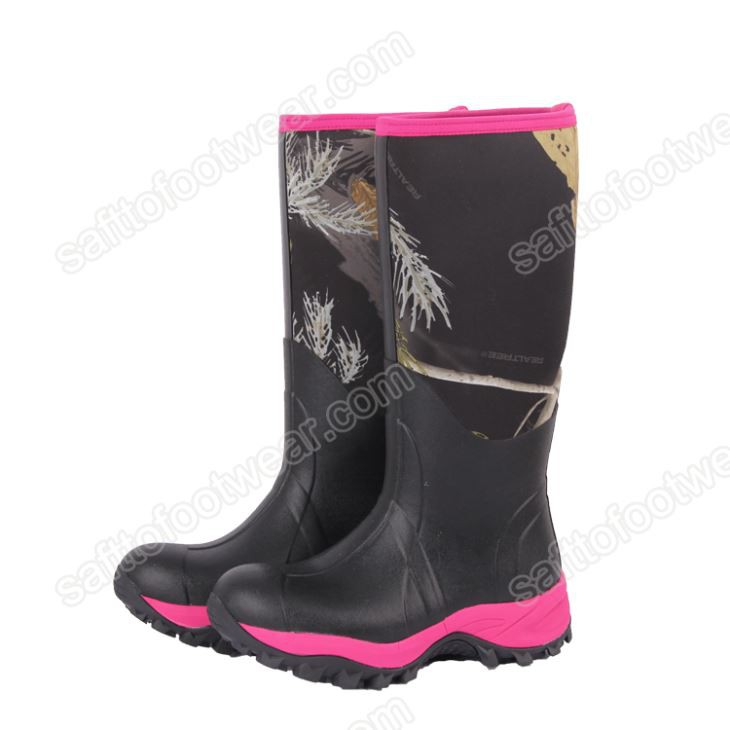
Hunting Rubber boots
Designed for hunting will generally be made from a combination of neoprene and rubber, and are always waterproof. They generally have a camo pattern or brown color for better concealment from your prey, and give you the advantage of a scent-free trail. They are offered in both insulated and uninsulated versions.

All-purpose rubber boots
These are great for ranching, farming, checking your irrigation or any situation that warrants avoiding wet, cold feet. While some designs resemble the traditional Wellingtons of the past, more all-purpose rubber boots feature insulation, improved tread and even stylish patterns and bright colors.

Snake protection
A specialty type of rubber boots, these offer you extra protection from fang punctures. Whether you're wading through water or walking through tall grass or brush, these boots will provide the extra protection you need, thanks to collar-height shin guards.
Application of Rubber Boots
For Farming
Rubber boots are perfect for carrying out farm or ranch chores because they provide shock absorption on hard surfaces, as well as giving comfort. Because of the rubber layer, they are smooth and easy to clean, which makes them suitable for messy jobs. Also, rubber boots are easy to get on and off, aside from their additional reinforcement and arch support.
For Working in Construction and Oil Fields
Some rubber boots that passed a particular compliance check, such as electrical shock resistance (ESR) rating, can be used for construction sites and oil fields. For instance, there are manufactured rubber boots that have a steel toe box feature to protect the metatarsals and phalanges at the front. Others even have a quadruple reinforced heel at the back for defense against shrapnel or nails.
For Gardening
Rubber boots are also ideal in working house chores and outdoor gardening. You will be comfortable moving back and forth around your house property and worrying less about the dirt on your feet, stepping on leaves, stems, or even pebbles.
For Boating
Rubber boots can be also worn whenever you feel like boating. There are boots in the market that are breathable and lightweight, making sure to keep your feet dry. The good thing about rubber boots is that they have rubber outsoles to resist slippery surfaces. Moreover, these boots are easy to get on and off.
For Fishing
Several types of rubber boot can work well for fishing. Particularly with features of high-cut boots that have a stretchy fitting on top to assure that they fit comfortably to your calf – while keeping it dry in the water. In addition, some rubber boots are meant for lower temperatures to retain the warmness of your feet even if they are submerged in cold water.
For Hunting
Another thing, rubber boots are best for hunting, and there are many styles nowadays that you can choose from, like camouflage prints. They will surely keep your feet dry and warm while blending in with your full camouflage hunting outfit.
Rubber Boots Components
Protective overlays
Seen on the toes and around the Achilles tendon areas, these provide added stubbing and abrasion protection from rough terrain, such as riverbeds, muddy forest floors and rocky trails.
Boot Zippers - Provide easy on and off.
Gussets
These create a stretchy section in the sides of the uppers to accommodate different calf sizes. They also provide flexibility and breathability. All Cabela's rubber boots with gussets have cinch buckles over the gussets to achieve a secure fit.
Buckles
Positioned at the outer topsides of the uppers, these adjust to tighten around your calves for a secure fit and a snug seal to keep debris out of your boots.
Boot Linings
Linings can aid in breathability, especially in vulcanized rubber boots, which don't allow anything to pass through. Mesh and fleece are popular linings, depending on the type of boots.
Soles - Rubber boots soles have three components: the insoles, midsoles and outsoles. The soles are attached to the uppers through vulcanization or with waterproof adhesive.
Insoles
Often removable, these directly touch and cushion your feet.
Midsoles
Provide stability, disperse weight and absorb shock. Incorporated shanks made of steel or fiberglass provide stiffness and even more support to the bottom of the boots. Midsoles with steel shanks are used in rubber boots used for hunting, and protect your arches when you're climbing a treestand ladder.
How to Choose Rubber Boots
Climate
First off, you need to assess the general weather of where you live. The climate in your area will help you determine the best option for you. Annual rainfalls may be uncertain which makes you need rain boots. Moreover, working on wet conditions will push you to have durable rain boots. If an instance you work under 40°F, you need insulated rain boots.
Comfort
Comfort is one of the biggest factors to consider. Those who wear rain boots for long periods of time would want to invest in comfortable footwear. Thus, it would be best to have rain boots that will make you comfortable whatever chores you are doing.
Fit
Each manufacturer designs their lasts or fits in the deliberate estimation of a human foot. The footwear category may vary with their style. Moreover, some footwears have laces making it easier for shoes to fit. But, most rain boots do not have laces and rain boots manufacturers rarely produce half sizes. Thus, it would be best to fit the boots to have an exact foot size.
Water Resistance
The boot style you prefer may vary depending on your intended use. Some may find lower boots more comfortable for casual uses while some prefer knee-high boots when working. This is an obvious preference as shorter boots cannot protect your feet from splashes and puddles of water.Thus, to have the confidence and protection, choose a rain boot that will snugly fit around your calf. Snugly fitted boots will completely protect your feet from errant droplets.
Warmth
Some who work in places with cold temperatures will prefer insulated rain boots. They are the best option for cold seasons. It gives a pleasant warmth to your feet. For you to know the insulation of the rain boots, check its warmth score. If you are not comfortable with having an insulated boot, you can have an uninsulated rain boot with thick socks.
Traction
The rain boot traction depends on the intended substrate, outsole, and type of rubber. Some rain boots that are designed for casual uses, these rain boots only have traction fit for general use. If you work in muds, snows, or high water, you need a rain boot that has large and deep lugs. Thus, it would be better to try on the rain boots to better determine your preference with traction ability.
Process of Rubber Boots
Mixing the Main Components
The natural rubber is mixed together with other components, namely carbon black, fillers, oil, and curatives. They are fused either in an open-top mill or enclosed mixing machine. Precise measurement is extremely essential in the stage of weighing out the ingredients to guarantee that the preferred physical properties of the mixture are attained.When the compound has been mixed, then it is needed to “settle” by storing it. Before storing, the mixture is tested first to assure that it passed the pre-determined specifications. Then from the store, the uncured rubber is sent to four minimal pre-processing stages before it reaches the assembly stage.
Molding of the Heel
In this stage, the rainboot heel is molded through compression. This is accomplished through placing a tiny piece of pre-weighed uncured rubber or called a slug into a mold cavity that is then compressed under high pressure and simultaneously heated.
Outsole Calendering
The sheets of uncured rubber or pigs are drawn from the store and heated up on a mill to prepare them to be soft. Once they reached the required smooth and soft texture, they are then fed through the outsole calender.A calender is formed by a series of metal rollers that process uncured rubber to a specific gauge and roll a pattern onto the surface of the rubber. Heated knives are used to carve out the wanted sole size in the aftermath of cutting around the template.
Upper Calendering
As mentioned earlier, the pigs from the store are heated up on a mill and dispensed in the upper calender. The “upper” part relates to the thin external layer of rubber on the rain boot. Not like the “outsole” part, which leaves a perfectly smooth finish on the rubber’s surface.As the rubber is being fed into the calender, a continuous thin sheet is wound up onto drums. Then different parts are cut out from the continuous layer of the upper rubber.
Skimming and Friction Calendering
The term skim refers to the canvas lining inside the rain boot. It has a coat of rubber skimmed onto the surface that creates a solid bond with other rubber elements. On the other hand, the term friction pertains to the process of weaving rubber canvas for a reinforced internal layer.This process is different from calendering due to the layers of the canvas that is dispensed into the first two rollers, whether it is ‘skim’ or ‘friction’. The skim or friction is then rolled onto the drums. Afterward, different parts are sliced out from the continuous rolls of skim or friction through a clicking machine.
Assembling of Boots
In this phase, the assembly line workers build up the rubber boots layer by layer, entirely by hand. The assembly chain is a long slender table that has a chain rotating around the outer side with lasts sticking up in the air. It stops for a limited time at each station where an individual is situated to do a specific task.A last is a mechanical shaped form of the human foot that is used for boot sole molding operations. Every pair of rain boots is assembled on a last and is completed by laying the successive coatings of skim, friction, uncured upper rubber components, and the likes up to the part where sole and heel are attached. Since the rubber is uncured, it is deemed adhesive. Therefore, once it is laid at the preferred position, it stays and plastered there.
How to Maintain Rubber Boots
Boot Cleaning
Make sure to clean your boots with a mild soap before conditioning, especially if there is visible dirt and mud on them. This will allow the conditioner to reach the rubber. You can hose off, use a wet rag or sponge to clean the entire exterior of your boots.
Conditioning
The sun can cause fading and early breakdown of rubber. To prevent this irreparable damage that can be seen as flaked, cracked, or excessively dry rubber, it is important to condition your boots regularly. Use a rubber conditioner after frequent use or every couple months during the off season. The conditioner should be applied liberally with a soft cloth on clean, dry boots. Wipe away excess and allow the boots to dry overnight.
Storage
When not in use, keep your boots in an insulated area like a finished basement or closet. If the boots are left outside or in an uninsulated garage, the rubber will shrink and grow with the temperature change from day to night. This could cause cracking in the rubber.Don't fold the boots over. Leave them upright, or hanging upside down on a boot rack to avoid cracking or splitting. Using a rubber conditioner before storing can help prolong the life of your footwear.
Our Factory
Our factory was established in 1992 as a designated supplier for the Chinese military and a designated laboratory of the Military Biochemical Research Institute. We specialize in the production of various protective boots, including military boots, CBRN overboots, NBC gloves, special function protective boots, hunting boots, fishing and wading shoes, mining boots, fire boots, oilfield boots, and anti smashing and anti puncture insulation boots.We have internationally leading assembly line equipment, production technology, and testing equipment, as well as a professional R&D team, quality inspection team, and excellent sales and service team, providing the highest quality products and services to new and old customers.
To ensure the high quality standards of our products, we only use raw materials that comply with international quality standards and environmental conventions. We are responsible for the quality of our after-sales products.After nearly 30 years of development, our customers are spread all over the world, including countries and regions such as the United States, Canada, Mexico, Germany, Finland, Russia, France, the United Kingdom, Italy, etc.


FAQ
Q: Should I oil my rubber boots?
Q: How do you make rubber boots last?
Q: What are rubber boots called?
Q: What do the Irish call rubber boots?
Q: Why are rubber boots used?
Q: What are white rubber boots called?
Q: What is a rubber boot slang?
Q: Why do Cajuns wear white rubber boots?
Q: Do rubber boots fit true to size?
Q: How can I make my rubber boots fit better?
Q: How long do rubber boots take to break in?
Q: How do I keep my rubber boots from cracking?
Q: Do rubber boots stretch over time?
Q: Do you need to condition rubber boots?
Q: Is it better to size up or down in boots?
Q: How can I make my rubber boots more comfortable?
Q: How do you prevent blisters on rubber boots?
Q: What can I put on my rubber boots to keep them from cracking?
Q: Should rubber boots be tight or loose?
Q: How do you take care of rubber boots?
As one of the most professional rubber boots manufacturers and suppliers in China, we warmly welcome you to wholesale high quality rubber boots made in China from our factory. Also, customized service is available.
best lightweight insulated hunting boots, special forces boots, butyl rubber overboots